
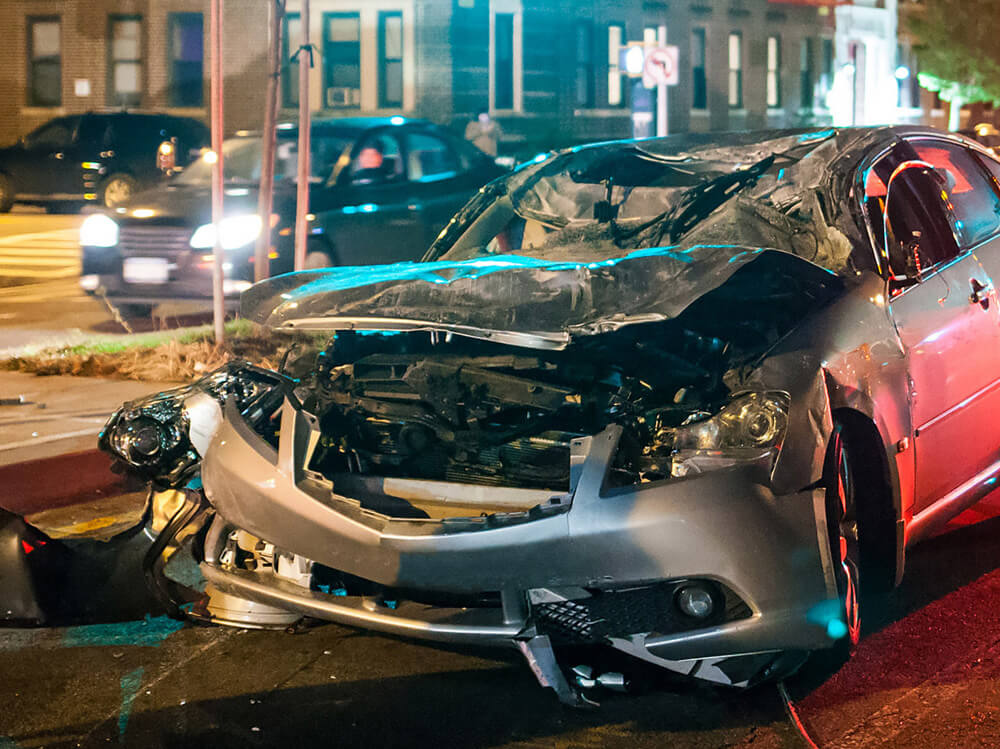
$850,000
Settlement
Motor Vehicle Accident
$675,000
Settlement
Motor Vehicle Accident
$450,000
Settlement
Pedestrian Accident
$300,000
Settlement
Dog Bite
Our Practice Areas
Car Accidents
Truck Accidents
Dog Bite Injuries
and Attacks
Traumatic Brain
Injuries
Pedestrian Accidents
Motorcycle Accidents
Bicycle Accidents
Wrongful Death
– L.Owen, Former Client“Mr. Tehrani is a fantastic attorney. I had a complicated small claims case for which he provided very sound and timely legal advice. He took the time to understand all of the intricate details and was able to help me achieve an even better outcome than I thought was possible. He is incredibly responsive, a tireless advocate, and his representation is truly invaluable. He will always be my go-to attorney. I feel a little badly for folks on the other side — they don’t stand a chance with Mr. Tehrani on your team!”
Put our experience to work for you
BOOK A FREE CONSULTATION TODAYIf you or someone you love has been hit by a semi, delivery truck, or other commercial vehicle, you need a truck accident lawyer in East Hampton who is familiar with the roads you drive every day and the rules that govern trucking companies. The aftermath of a truck crash is fundamentally different and more complex than a standard car accident.
The injuries are often catastrophic, the stakes are higher, and you are up against massive trucking corporations and their high-powered insurance carriers. At Tehrani Law Group, you can get strong representation from a Connecticut personal injury attorney with the knowledge, resources, and aggressive approach necessary to take on these powerful entities. We can fight for the justice and the full compensation you deserve.
The Dangerous Roads of Middlesex County
The combination of state highways, local roads, and challenging terrain in Middlesex County creates an environment where large truck accidents are common. Trucks use a combination of routes to deliver goods throughout the region. Several roads in and around East Hampton present elevated risks for heavy vehicles:
Route 66
As a key east-west route, Route 66 carries significant commercial traffic through East Hampton. Its winding sections and transitions between rural and more congested areas can be particularly challenging for large trucks, increasing the risk of accidents related to speed, curves, and sudden stops. According to the Connecticut Crash Data Repository, Route 66 has the most accidents in East Hampton.
Route 17
Running along the Connecticut River, Route 17 in Middlesex County is known for heavy traffic and potential merging issues, especially where it intersects with other state highways. Merging traffic from smaller roads onto a busy route is a common scenario for rear-end and side-swipe collisions involving trucks.
Route 9 and the Arrigoni Bridge
Just across the river in Middletown, high-speed merges and rapid lane changes on Route 9 and near the Arrigoni Bridge create concentrated hazards. Smaller towns around Middlesex County frequently experience a disproportionate number of serious crashes due to the high volume of through-traffic.
Local Streets and Intersections
Within East Hampton, delivery trucks and smaller commercial vehicles navigate local intersections, residential streets, and parking lots. Tight turns, blind spots, and difficulty maneuvering large vehicles in close quarters frequently lead to accidents involving pedestrians or smaller passenger vehicles.
Our East Hampton truck accident attorney is familiar with the accident patterns and traffic conditions of these local and regional roads in East Hampton and Middlesex County.
Connecticut Truck Crash Statistics
Large trucks make up a small share of vehicles in reported crashes, but still account for a significant portion of the state’s most severe roadway incidents because of their massive size. The Connecticut Crash Data Repository reports the following information on truck crashes since January 1, 2022:
- East Hampton: About 2% (16 of 793) of the vehicles involved in crashes were large trucks.
- Middlesex County: About 2.4% (550 of 22,722) of the vehicles involved in crashes were large trucks.
- Statewide: About 2.9% (19,575 of 667,848) of the vehicles in crashes were large trucks.
The data show a consistent pattern from local to statewide levels. Roughly 2-3% of vehicles involved in Connecticut motor vehicle accidents are large trucks. Although this may seem small in proportion, they are often capable of causing significant harm due to their weight and stopping distances.
Why Semi-Truck Accidents Are Not Like Car Accidents
When a crash involves a commercial truck, the situation differs in several key ways:
- Size and Stopping Power: A loaded tractor-trailer can weigh up to 80,000 pounds. It needs much more space to stop, so a small mistake can have significant consequences.
- Multiple Defendants: Responsibility can include the driver, the trucking company, the truck or trailer owner, the company that loaded the cargo, a broker, or a repair shop.
- Complex Evidence: Investigations look at electronic logs (ELDs), black box engine data (ECM), dash-cam video, GPS and dispatch records, and maintenance files, not just skid marks and photos.
- More Complicated Insurance: Commercial trucks often have multiple layers of insurance coverage, which can affect how adjusters handle claims.
- Professional Rules: Truck drivers and companies must follow federal safety regulations about hours, maintenance, and cargo, beyond ordinary traffic laws.
Because of these differences, a truck crash is not handled like a simple car fender-bender. It usually requires gathering more evidence and examining company practices closely, not just the driver’s actions.
Trucking Regulations That Shape Your Case
To succeed in your truck accident case, we must prove that the liable party violated a Federal Motor Carrier Safety Administration (FMCSA) rule or a Connecticut state traffic law. Regulations that negligent parties often violate include:
- Hours of Service (HOS): These HOS rules are designed to prevent driver fatigue by limiting the number of hours a truck driver can be on the road before taking a rest break. Truckers must use an ELD to track their hours.
- Driver Qualification and Training: Carriers must vet drivers’ records and maintain qualification files.
- Vehicle Inspection, Repair, and Maintenance: Trucking companies are legally required to conduct regular and thorough pre-trip and post-trip inspections and maintenance to ensure brakes, tires, and lights are functioning correctly.
- Cargo Loading and Securement: Improperly loaded or unsecured cargo can cause a shift in the truck’s balance and stopping distance, leading to jackknifing, rollovers, or spilled loads.
- Drug and Alcohol Testing: FMCSA regulations mandate specific drug and alcohol testing for commercial drivers.
We use these rules to evaluate negligence, preserve evidence quickly, and show a jury where a company or driver may have been negligent.
Common Causes and Types of Truck Accidents
Understanding why truck collisions happen is the first step toward building a successful claim. Many severe truck accidents are the result of the driver or commercial carrier’s negligence and often include:
- Driver Fatigue: A tired driver has slower reaction times, comparable to driving while impaired.
- Distracted Driving: Texting, using a dispatch device, or other distractions cause a driver to take their eyes off the road, which, at highway speeds, can cover the length of a football field even if only for a few seconds.
- Speeding and Reckless Driving: Due to the long stopping distance required for large trucks, speeding increases the risk of a collision, particularly rear-end accidents.
- Improper Maintenance: Accidents caused by faulty brakes, blown tires, or defective lights are the fault of the company that failed to inspect or repair the vehicle.
- Improper Load: An overloaded or unevenly distributed load can cause a truck to lose control, especially when navigating curves on roads like Route 66 or merging onto Route 17.
- Inexperience or Inadequate Training: Poorly trained drivers or those who lack experience with the specific type of cargo or route are more likely to make critical errors.
Identifying these failures is critical to establishing liability against the driver and the trucking company.
Types of Catastrophic Truck Collisions
The size and momentum of a semi-truck often result in specific types of collisions. Common accident types we see that carry a high risk of catastrophic or fatal injury include:
- Rear-End Accidents: Often caused by a truck’s failure to stop in time due to speed, tailgating, or driver distraction
- Jackknife Accidents: The trailer swings out, forming a 90-degree angle with the cab, often caused by sudden braking or slick road conditions
- Rollover Accidents: Occur when a truck takes a curve too fast, a load shifts, or a driver attempts an aggressive maneuver
- Underride Accidents: Where a passenger vehicle slides underneath the truck’s trailer, shearing off the top of the car and causing fatal head and neck injuries to occupants
- No-Zone Accidents: Occur when a truck driver fails to check their massive blind spots and changes lanes into a vehicle traveling alongside them
Our firm gathers crucial evidence and hires seasoned experts to investigate the physics of each scenario, determining fault and maximizing client recovery.
Catastrophic Injuries and Damages in Truck Accident Cases
The sheer force of a large truck collision often leads to life-altering injuries that require extensive medical care and financial resources. Common devastating injuries include:
- Traumatic brain injuries (TBIs)
- Spinal cord injuries resulting in paraplegia or quadriplegia
- Severe burns and road rash
- Amputation
- Multiple fractures and crushing injuries
- Internal organ damage
- Wrongful death
We coordinate care and medical record documentation to share your medical story clearly and persuasively.
Compensatory Damages You Can Pursue After an East Hampton Truck Accident
The goal of a personal injury claim is to recover economic and non-economic losses. Our East Hampton truck accident lawyer will fight for full compensation for all your damages, including:
- Medical Expenses: Past, present, and future costs, including hospitalization, surgeries, rehabilitation, and long-term care
- Lost Wages: Income lost due to time missed from work and loss of future earning capacity if the injury is disabling
- Pain and Suffering: Compensation for the physical pain, emotional distress, and mental anguish caused by the accident and injuries
- Loss of Consortium: Compensation for the negative impact on the relationship with your spouse or family
- Property Damage: Cost to repair or replace your vehicle and other damaged property
- Wrongful Death Damages: Compensation for funeral expenses and lost financial support if you lost a loved one in the crash
In rare cases, if the at-fault party’s conduct was exceptionally reckless or malicious, the court may award punitive damages to punish the defendant and deter similar behavior in the future.
Connecticut’s Critical Legal Deadlines
Injured parties must file most Connecticut personal injury claims within two years of the accident. In wrongful death cases, the estate’s executor also has two years to file a claim.
There are much shorter notice requirements when claims involve governmental or public entities. If you miss these deadlines, you may forfeit your right to pursue compensation through a civil lawsuit. Hiring a truck accident attorney in East Hampton is crucial to ensuring you meet these deadlines.
Identifying All Liable Parties in a Truck Crash
Typically, only the driver is liable in a typical car accident. However, in a truck accident, there can be several potential defendants. Each has its own insurance policies and legal teams. Identifying every party responsible is essential to securing maximum compensation. Depending on the facts, we may pursue claims against:
- The Truck Driver: For negligence or statutory violations
- The Trucking Company: For negligent hiring, inadequate training, pressuring drivers to violate HOS rules, or failing to maintain the truck
- The Cargo Loader: For unsafe loading, poor securement, or shipper-created hazards
- A Maintenance or Repair Company: For negligence in performing inspections or repairs that led to a mechanical failure
- The Truck or Parts Manufacturer: For defective brakes, tires, underride guards, or other faulty components
- A Governmental Entity: For road defects or signal malfunctions
Our team at the Tehrani Law Group will investigate your crash to determine all potentially liable parties and pursue maximum compensation.
How Connecticut’s Comparative Negligence Works
Connecticut operates under a system called modified comparative negligence. This allows you to recover damages even if you were partially at fault for the accident, but only if you are 50% or less to blame.
How We Prove Negligence Against a Liable Party
To win, we must prove the at-fault party was negligent. We establish this by demonstrating:
- Duty: The liable party owed you a duty of reasonable care to operate their vehicle safely and follow all regulations.
- Breach: They breached that duty.
- Causation: The breach of duty directly caused the accident.
- Damages: You suffered measurable injuries and losses as a result.
We utilize our resources to construct a case on your behalf, supported by solid evidence.
Critical Evidence We Must Secure
We establish negligence through:
- Black box data
- Driver qualification files
- Inspection and maintenance records
- Accident reconstruction
- Witness statements
- Traffic camera footage
- Vehicles involved in the accident
- Dispatch communications
- Load documents
- Medical records
Our team takes swift legal action to preserve crucial evidence supporting your case.
How Tehrani Law Group Can Help You After an East Hampton Truck Accident
You need an experienced advocate if you are injured in a truck accident. At Tehrani Law Group, we offer:
- Immediate investigation and evidence preservation
- Local knowledge
- Regulatory proficiency
- Comprehensive liability analysis
- Aggressive negotiation and litigation
- Clear communication
If you are injured in a truck accident, do not sign any documents, give any recorded statements, or accept any settlement offer until you have spoken with our experienced lawyer.
Contact Our Truck Accident Attorney in East Hampton, CT
A truck wreck can change your life in seconds. If you are navigating the aftermath of a truck accident in East Hampton or anywhere in Middlesex County, Tehrani Law Group is ready to help you pursue accountability and the full value of your claim. Contact us to schedule a free consultation today. You can also call us at (860) 261-6770.
Connecticut's Personal Injury Attorney
tehrani law group
REACH OUT NOW
With our free consultations, you are able to get an idea of your claim, speak with our experienced attorneys, and know that your case will be in good hands.
Below, you can schedule a consultation with an attorney at our firm, you can fill out a form and we’ll reach out to you as soon as possible